Frost and Fire

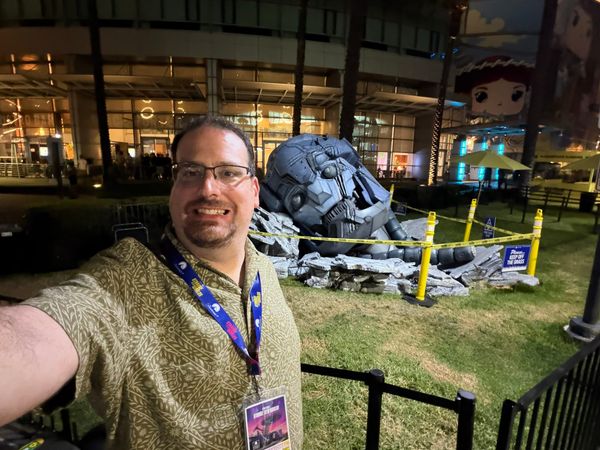
Brain Dead Studios here in Los Angeles put on an event called Fantasy Fest this past weekend, which was kind of a catchall that featured fantasy movie screenings, gaming/comics vendors, war games, Magic: The Gathering tournaments, and live bands. The main draw for me was a performance by one of my favorite cult metal acts, Cirith Ungol, and the opportunity to see Conan: The Barbarian in a theater. Neither disappointed. Watching Conan on the big screen gave me a chance to really appreciate just how insane and special that movie is – and how it embodies what makes pulp entertainment so enduring.
There were many sword-and-sorcery movies in the 70s and 80s – particularly in Italy, since the abundance of ruins meant they didn’t need to build sets for them. Conan the Barbarian, released in 1982, stood out from the pack. It might be the only one of them that’s truly a classic film (sorry, Beastmaster). What made it great (besides Arnold Schwarzenegger)? Filmmaker John Milius and original screenwriter Oliver Stone approached Robert E. Howard’s material with the right balance of reverence and silliness.
Unlike other barbarian flicks, which leaned into schlock, Milius and Stone tackled Conan like it was a biblical epic – only instead of being about Moses or Ben Hur, it was the story of a wheel idiot (term courtesy Robert Brockway) fucking and fighting and stealing his way to revenge against a cowardly snake wizard.
Stone wrote the initial draft of the film while blasted out of his mind on cocaine and other drugs, so the narrative feels like an insane fever dream. Milius grounded it somewhat with his rewrite, but the final film retains the dreamlike vibe. It feels like you’re being told a tale passed down through time by a tradition of great oral storytellers, only with Arnold Schwarzenegger punching a camel. Actually, that’s what works about this approach – Conan is a wheel idiot making his way through a world of awe-inspiring wonders and untold horrors. Of course he’d be experiencing it like a dream.
The Marcus Nispel remake tried to elevate the material into grim mid-2000s slop and lost the appeal of the source material. The Italian knock-offs and Conan the Destroyer/Red Sonja went too far into the goofiness of burly dudes fighting rubber monsters. The genius of Milius and Stone’s take was that they presented it as mythology, giving it gravitas while never losing sight of the fun of the character.
Conan – the character – works because he appeals to the brute side of us all. Wouldn’t it be awesome to be able to solve problems with a grunt and a cleaving of your sword? Conan essentially wanders through the movie following his every primal urge – until the end, at least, when that fails him and he needs to grow up and use his extremely underdeveloped brain. He grounds the film because we always know which way is north with him, even when learning about the strange world of Hyboria.
It’s a great translation of the original Howard stories, where Conan basically shows up somewhere new and cool, fucks stuff up, and wanders off to the next adventure. He needed to be simple to make those stories work – readers often picked up those pulp magazines blind and needed to be able to get on board with the narrative immediately. You couldn’t really have complex characters and do that. That’s why you had so many hard-boiled detectives and gunslingers and gangsters in those stories. You knew what they were up to immediately.
I love those stories and I’ve devoured hundreds of pages of authors like Howard, Dashiell Hammett, HP Lovecraft, MR James, Seabury Quinn, etc. Some were better than others; almost all of them held problematic views. That aside, they still thrill.
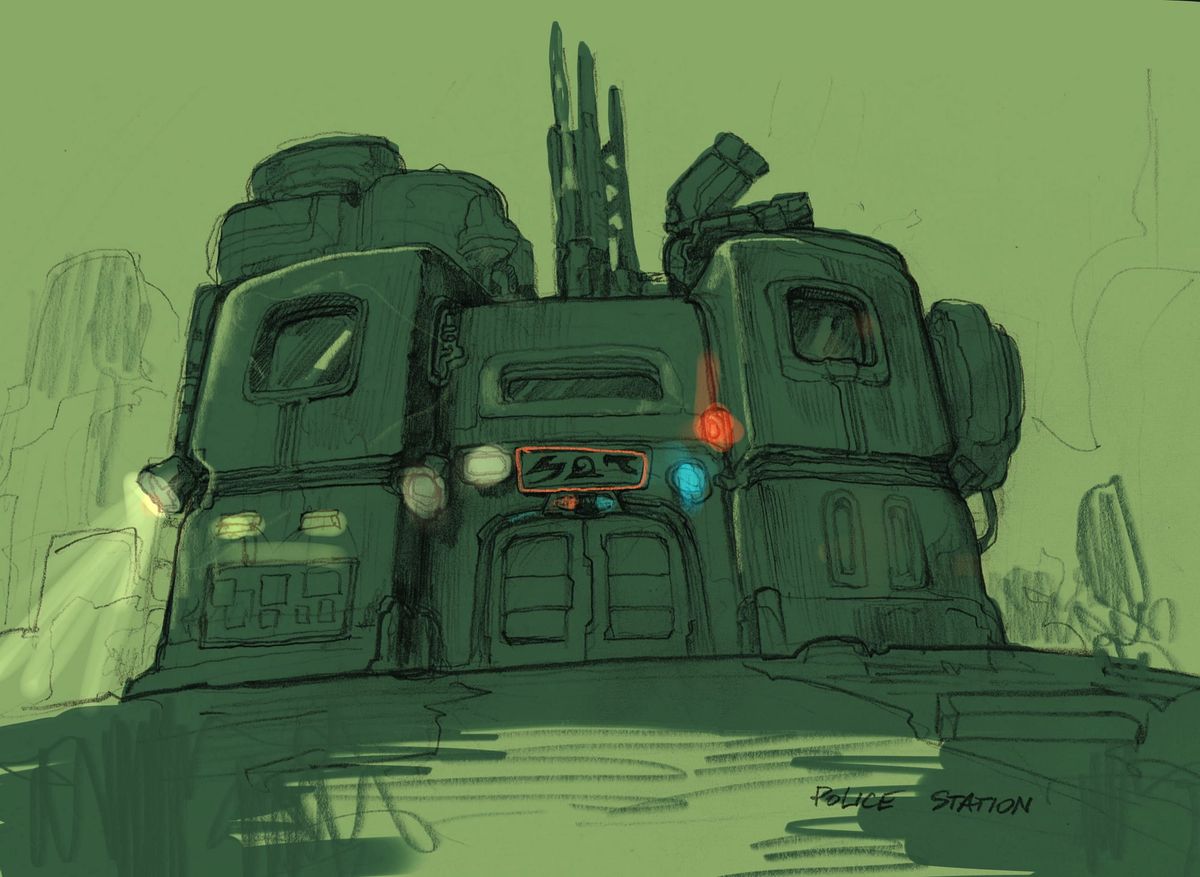
My comic WAYPOINT comes from a pulp tradition. I wanted the world of Zeta Hub to work in a similar way – there’s a lot going on in the station, but you enter the world through my detective, Claire Carlisle, and immediately get what’s going on. So many modern stories fixate on backstory and explaining every little thing. That’s not fun. What I find fun is figuring out ways to use the unusual setting to inform the characters. One of the mistakes I made in earlier drafts of the script was dedicating Claire’s opening monologue to explain the space station instead of giving us a look into her inner life. All the setting stuff snaps into place when we see it through her eyes anyway. She’s not that complicated a character – she very much falls into the hard-boiled detective tradition – but the reader still needs to know they have a reliable guide when entering a world different from our own.
One of the other movies shown at Fantasy Fest, Legend (1985), failed in a lot of the ways that Conan succeeded. It had gorgeous set design and a dreamlike narrative, but it threw you into the middle of things without giving you the chance to find your footing through a relatable character. The female lead, Lili (Mia Sara), floated through the world; the male lead, Jack (Tom Cruise), was a forest idiot. Neither of them anchor the film because we never really get a sense of who they are, so it just becomes a montage of beautiful nonsense and Tangerine Dream thrown at the viewer. If Conan had been there, that wouldn’t have been a problem – although it would have been a very different movie.
This all a long-winded way of saying: tone matters, setting doesn't, and story is character, so if your characters suck so will your story.
If you want a story that doesn't suck, follow my Kickstarter here:
https://www.kickstarter.com/projects/waypointcomic/waypoint-1-4
NOW SPINNING
Ginger Baker's Air Force – S/T
The Chemical Brothers – Dig Your Own Hole
Flipper – Gone Fishin'
Hanabie. – Reborn Superstar!
Spirit Adrift – Infinite Illumination